Wednesday, September 29, 2010

HOV lanes, Not in my Backyard!

What exactly are HOV Lanes?  HOV or High Occupancy Vehicle lanes are lanes on a congested highway that are set aside either by a buffer or a barrier and are reserved for vehicles with usually 2 or more passengers.


Barrier HOV  ops.fhwa.dot.gov

Buffer HOV   www.cpedia.com

HOV lanes mean you have to pay a toll to drive on the highway, right?  WRONG, an HOV lane is just a dedicated lane of a regular highway.

If they make it so one lane is only for carpools and buses, it's going to make traffic even worse! Well not according to a study done by the Texas Transportation Institute (TTI), part of the A&M University System, on the effectiveness of HOV lanes in Dallas. TTI found that

  • All five freeways with an HOV lanes have shown an 8 to 12 percent increase in average automobile occupancy, suggesting that motorists have formed carpools to gain the benefits of traveling in an HOV lane.
  • HOV lane speeds on all five facilities are significantly higher than the speeds on the adjacent general-purpose lanes.
  • General-purpose lane speeds have remained constant or have increased on all corridors since the opening of the HOV lanes.
  • Bus operating speeds have more than doubled since the opening of the HOV lanes on IH-30, IH-35E North, and IH-35E South during the AM and PM peak hours.
  • DART’s bus operating costs have been reduced by approximately $587,000 per year since the implementation of HOV lanes.
  • All HOV lane projects are cost-effective and have attained or are projected to attain a benefit-cost ratio greater than 1.0 within the first six years of operation.
But, light rail would be so much better than HOV lanes and buses.  Well apparently commuters in Austin don't agree.  Tory Gattis at houstonstrategies.blogspot.com says that
Austin bus riders are protesting the cancellation of existing commuter bus routes that parallel the new rail line.  Why?  Because the buses are *faster*.  This is one of the key arguments I've made against commuter rail in Houston: net-30mph commuter trains are much slower than 60mph express buses in HOV lanes, especially when considering the long walk or connection after getting off of the train vs. buses that can circulate around the job center to get you close to your building.
So, if HOV lanes increase the speeds on highways, make buses faster, help bus transit authorities save money, and are cost-effective (in other words, pretty inexpensive to install), WHY ARE YOU AGAINST THEM?????

Tuesday, September 28, 2010

That F@##%@# Tree Ordinance!

Developers hate being hindered by rules that limit the amount of property they can use for construction, it's easier to make a building plan for a blank sheet of paper, than for one with barriers, such as trees.
Most people would say, what's the big deal, whenever I fly into San Antonio it's a sea of trees. But the Urban Ecosystem Analysis of Greater San Antonio done by American Forests found that

  • In 1985, areas with heavy tree canopy (50% or greater treecover) covered 26% of the area (201,000 acres). By 2001, that number had fallen to 20% (156,000 acres)—a loss of over 22% of the densely forested areas. 
  • Areas with light tree canopy (less than 20% tree cover) expanded from 69% in 1985 (540,000 acres) to 77% in 2001 (605,000 acres). Though agricultural areas as well as urban areas fall under this category, the sharp increase in San Antonio’s population over the last decade (22.3% - Census Bureau) suggests that this increase in areas with little tree cover is largely the result of urban expansion.
  • While areas of medium density canopy (20-49%) had the most significant percentage change, the total number of acres affected were small in comparison to the heavy and light canopied areas. In 1985, 6% of the Greater San Antonio Area (47,000 acres) was covered by medium density canopy. Thisnumber fell to just 3% by 2001 (27,000 acres) a loss of approximately 43%. This trend suggests that as new development occurs, tree canopy is not being conserved.
In San Antonio trees are a special commodity.  It takes a long time for a tree to grow naturally in San Antonio.  Dr. Jerry Parsons at PlantAnswers.com says that
In our alkaline, rocky, and caliche soils, several tree species that do excellent in other areas of Texas, do very poorly here. Our sudden temperature fluctuations in the spring and fall kill many non-adapted trees each year.
High temperatures, low rainfall and alkaline soils may deter other trees but the hardy Live Oak finds a way.
Live oak is fast-growing under optimal conditions. Seedlings may reach 1.2 m (4 feet) in height within the first year, but growth rates taper off as age of the tree increases (Harlow et al 1979; Haller 1992). 70 year old trees may have trunks that measure as much as 54 inches in diameter (Van Dersal 1938).
Around here under natural conditions, it takes a Live Oak or a Texas Red Oak, 10 years to grow into a nice shady tree.

 The city tree ordinance used to only protect 10" diameter(and larger) trees which didn't take into account smaller native trees.  But in 2006, the ordinance was strengthened to include other native trees besides heritage live oaks and fees were raised so the builders and developers wouldn't be as tempted to build the fines for cutting down trees into the cost of development.  However, developers have discovered other ways to get around the ordinance by using vested rights, and claiming other uses besides development (such as claims that the land will be used for ranching) to clear cut property.
``People get frustrated in the process,'' engineer Gene Dawson Jr. said. ``They get held up by the city arborist on a tree issue, so they just say, `Well heck, I'm going to get my property grandfathered and I'm going to go clear the whole (property).'
In one of the most egregious cases of clear cutting
The trees were bulldozed to make room for Encino Ridge, a dense neighborhood by national chain Pulte Homes, one of San Antonio's largest builders. The Michigan-based company took in a record $11.7 billion in gross revenue last year.
``They worked day and night out here,'' nearby resident Donna Biggs said. She stretched her arms to form a wide circle. ``There were oaks this big cut down.''
Encino Ridge from Citizens Tree Coalition
Pulte's local president, Bart Swider, said the company wanted to grade the hill to cut down on the cost of each home. But he admits the clearing was an environmental blunder -- one that city tree preservation ordinances might have prevented.
In San Antonio, the law encourages the development industry to blur the line between legitimate projects and outright land speculation, records show.
The Express-News review found that:
-- In a pattern repeated on at least three occasions since 1994, developers flooded City Hall with plat filings hours before council members approved new development rules, exempting thousands of acres from more stringent city codes.
-- Developers and lobbyists helped write rules such as the water quality ordinance. Those same insiders then shepherded scores of clients through the exemption process to avoid those rules.
-- The oldest permit ever used to trigger vested rights in San Antonio dates to the horse and buggy.
In May 2010 the City Council underlined its commitment to increase the tree canopy in San Antonio by doubling the cost of cutting down trees.
 The new ordinance doubles the mitigation costs — from $100 to $200 per inch in tree diameter for significant trees and from $300 to $600 per inch for heritage trees. That means cutting down an oak with a 24-inch diameter would cost $14,400, and a 30-inch-diameter tree would cost $18,000 to remove.
The council also voted to implement a citywide program to help meet the goal of a 40 percent tree canopy, using developers' mitigation fees to plant new trees.
The ordinance, which is supposed to close two loopholes that allowed for the clear-cutting of trees, doesn't apply to property that's already been developed.

So what does beefing up the Tree Ordinance mean for the ordinary property owner?  You are exempt from the Tree ordinance if your tree meets any of the following conditions:

A. Any tree(s), significant, or heritage or tree canopy determined to be diseased, dying or dead, by the city arborist.
B. Any tree(s), significant, or heritage or tree canopy determined to be causing a danger or be in hazardous condition as a result of a natural event such as tornado, storm, flood or other act of God that endangers the public health, welfare or safety and requires immediate removal.
C. Tree(s) or tree canopy located on property 0.5 acres or less on which construction of single-family, two-family or three-family residential dwelling units has been completed.
D. Tree(s) or tree canopy located in the clear vision area, as defined in the street improvement standards.
E. Tree(s) or tree canopy preventing the opening of reasonable and necessary vehicular traffic lanes in a street or alley.
Needless to say, residential developers are unhappy about this augmentation of the law and claim that it will cause them to pass the cost on to the consumer and may price some prospective buyers out of the market.  But most new housing being built today is outside of Loop 1604, there is still plenty of good pre-owned housing stock within 1604 with developed trees and yards that are affordable.  Personally,  I want trees in my yard, how about you?

Saturday, September 25, 2010

What's Your Vision of San Antonio's future?

This morning I went to the launch meeting for SA2020, a series of public planning meetings to come up with a vision of San Antonio for the next ten years.  A very enthusiastic crowd was there, and I do mean crowd.  The event planners originally expected about 700 participants, over 1300 people signed up to go.  They managed the crowds by spilling over from the TriPoint YMCA at US 281 and N St Mary's to the SAWS building on the other side of the highway.   In order to enable all those people in different buildings to interact, the meeting was webcast by NOWCastSA. The webcast also made it so that not only could people at the conference participate, but also anyone online could as well.  The conference received over 1500 comments from the online community.  One man even tweeted fromt the Denver Airport while in transit.


The major themes that the attendees felt San Antonio needed to work on were:
  • Education at all levels but especially school readiness and job and vocational training
  • Health including magnet hospitals, lowered obesity rates, and accessibility to health care
  • Sustainable Growth including revitaliztion of older areas, water policy, and more controlled growth
  • Infrastructure Improvements
  • Transit options from drivable streets to bicycle lanes and better mass transit
  • Making SA more Hip--this particularly for the young singles out there
  • Combine Growth, Progress and still keep the history of the city
  • Improve Livability in the Inner city and keeping a balance with tourism
  • Job Equity and bringing better paying jobs
But not only did we talk about what needed to improve we also talked about what's great about San Antonio.
  • The Big city with the Small town feel
  • Strong support of the military, not just the bases but also for disabled vets and retirees
  • Cultural Diversity
  • Historic Traditions and conservation
  • Food
  • Fiesta
  • Economic Stability
  • Strong work ethic
  • Accessibility to more state parks than any other city in Texas
  • Higher Education options
  • Cooperation between the civilian and military Biomedical community
and many other positve qualities.

There are four more public meetings planned
October 28, 2010           Creating a Vision for San Antonio
  7-9 pm
November 20, 2010       How will we Measure Progress?
  9am-12noom
December 7, 2010         What Will Success Look Like? 
  7-9pm
January 22, 2011           Putting it Together:  SA2020
  9am-12noon
If you would like to participate in these meetings, check out the SA2020 website.  If you can't attend, the other meetings will also be webcast live and you can participate by posting comments during the meeting.
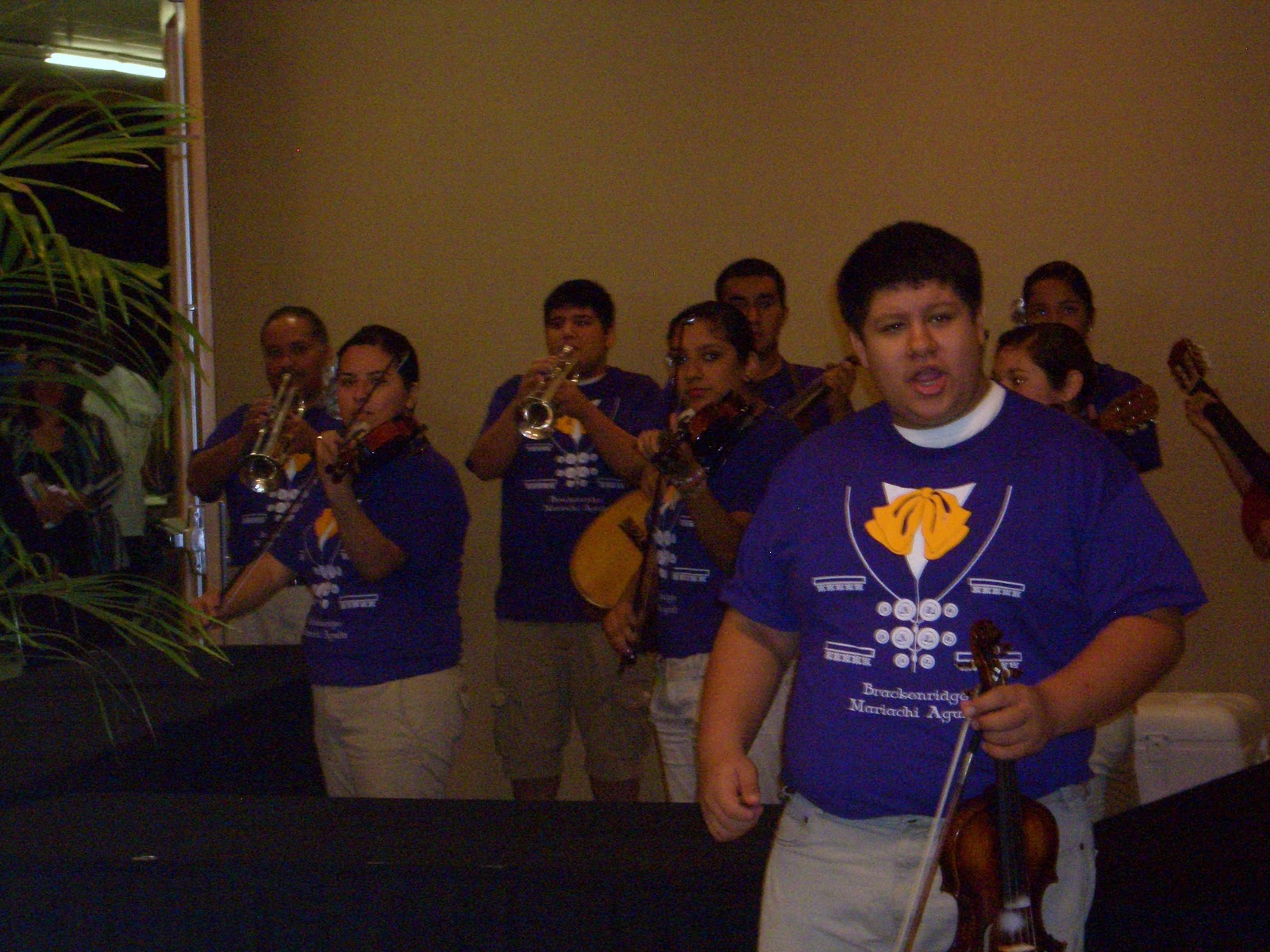
Brakenridge HS Mariachi Band

Now the people who came to the conference are probably the most engaged people in San Antonio when it comes to civic issues, but what about your average San Antonian?  SA2020 wants to hear from you as well.  They've made it easy for you by setting up an online community survey and a special youth survey to engage the youth of San Antonio to find out what San Antonio needs to do to keep them here.  So what do YOU think?

Thursday, September 23, 2010

Bike Sharing In SA-You're kidding right?

Bicycle Sharing has become the In Thing for cities wishing to project a green image.  Portland, Oregon was the first city in the US to start a program back in 1994.  Its program was simple (take a bike, use it then leave it for someone else to use) and free but ended in failure due to vandalism and theft.  Bike share programs are much more sophisticated today and although they aren't free, the fees are affordable.  San Antonio kicks off its pilot program, "B-cycle" on October 13, 2010 at the MPO Bike Night event.  But what exactly is bicycle sharing and how does it work?

There are several bike sharing programs in Europe and other cities in the US to draw inspiration and lessons from.  There's even a bike sharing blog.

In Paris, Velib (short for velo (bicycle) and liberte (freedom)  has been running for three years now and is very popular.  Velib has three subscription options that allow you to use the service for one day, one week or one year.  To subscribe you must have a major bank card (Mastercard, Visa or American Express).  The charge to rent the bike for 1 day is 1€ ($1.34), a week 5€ ($6.67) and a year for 29€ ($38.69) for a year's subscription.  The service encourages short term usage by making the first 30 minutes of use free and then charging additional fees that escalate over time.  They also encourage uses to park bikes in docking stations at the top of hills, like Mont Marte, by adding an additional 15 minutes of free use.  The bikes are sturdy, have a guard to protect clothing from the chain, have a large basket to carry purses, brief cases, etc., and a security chain in case you have to park it somewhere other than a docking station.


Bicing in Barcelona is another bicycle for hire system that has also been running for about 3 years.  Similar to the Velib system, it is also meant for short to medium length trips.  However the system caters exclusively to commuters who live in the city (to keep from competing with local tourist companies that hire out bicycles), subscriptions are only given out on a yearly basis for 30€ ($40.02).


Pamplona had a bicycle sharing (n'Bici) program when I was there in June 2009 (inagurated in 2007). The Ayuntamiento (City Hall) website described the program as something like checking out a book out from the library.  You could go to city hall to get your card issued and then swipe it at the n'Bici docking stations.  Now it's no where to be found on the Ayuntamiento site and I'm wondering if the last festival de San Fermin (the running of the bulls) was it's downfall.  Bicycle theft and vandalism is a common problem for bicycle sharing programs and things get pretty rowdy around festival time.

Nice Ride in Minneapolis charges a subscription plus a trip fee.  The first 30 minutes are free to encourage short rides.  Subscription prices go from $5.00 for 24 hours to $60.00 for a year.  Lydia Kelly of the San Antonio Metropolitan Planning Organization (MPO) was recently in Minneapolis and she said she saw elementary school students using the Nice Ride bikes to go home after school. 

In order to discourage theft most of the bikes used in these programs are heavy, three gear models that are meant for short term rides over fairly easy terrain.  San Antonio Bike Share, a non profit organization which will be maintained and operated by Bike World bicycle shops, will use bikes provided by B-Cycle, a company that provides bikes for over one hundred cities in the US.  There is no word yet on the fees for the SA program but it will have membership fees for access to the bikes and usage fees based on the amount of time the bike is used.

Criticisms of bike sharing programs include vulnerability to theft, damaged bicycles that are unrideable, no place to carry purses, bags, etc, and not enough bicycles.  The San Antonio program solves the theft problem by using bikes that have GPS chips installed in them and by making sure that VIA bus drivers don't allow the bikes to be put on their bike racks.  Some bicycles used in sharing programs have a button you can push to alert the company that the bike is damaged.  B-Cycle bikes don't appear to have this feature, their demo video just says to put a damage bike back on the docking station.  I'm not sure how they would know which ones need repair.  The B-Cycle bikes do have a basket in the front to hold items you have with you, they also encourage you to use a helmet, but it has to be your own, there are no helmets to share (probably a good idea, I don't want to get head lice!).  The San Antonio program is starting with 194 bikes in the downtown area, but I haven't been able to find out where the docking stations will be.  The Streetsblog was critical of the San Francisco program because it was starting with only 50 bikes, but San Francisco has a much more friendly bicycle culture than San Antonio, so the criticism is justified.

The unfriendly bike culture in SA is likely to be the biggest obstacle to the bike sharing program, as most of you cyclists out there know, bicycling in San Antonio can be hazardous to your health, sometimes even deadly.  The Bike Map put out by the MPO rates most of the streets in the downtown area as fair when it comes to cycling conditions, but they obviously need some work.  Streets to avoid downtown are Commerce between Alamo and Frio, Frio south of Dolorosa, Dolorosa/Market between Dwyer and Cameron (Spanish Governor's Palace),  San Pedro north of Main, Alamo from Commerce to HemisFair Plaza, Durango east of Alamo and west of IH 35 and Cypress street.  I'd definetely get a bike map from the MPO before venturing anywhere on a bike, even on the streets considered fair you have to be on guard.

Bicycle rules of the road for automobiles and bicycles are not very well known in SA, so FYI

  • A cyclist shall never ride against the flow of traffic
  • A cyclist must obey all traffic signs, signals and rules of the road (this means stop at red lights and stop signs, no rolling through)
  • Every bicycle in use at night time shall be equipped with the following:  a lamp that emits a white light visible at a distance of at least 500 feet and a type of red reflector on the rear approved by the Department of Public Safety (it doesn't appear the the B-Cycle bikes have these features, at least from their website)
  • Persons riding side by side shall not impede the normal and reasonable flow of traffic;  Persons riding side by side on a laned roadway must ride in a single lane
  • Bicycles may be ridden on roadway shoulders, except where expressly prohibited by law
  • A motorist must allow 3 feet of clearance when passing a cyclist (you have to give this much to other cars to avoid clipping them, so why not to cyclists as well)
I'd be interested in hearing from anyone who tries out the SA bike sharing program to see what you think, or even if you are driving near them downtown.  Drop me a line.

Wednesday, September 22, 2010

I can't put that in my recycling can, then what do I do with it?

It's a little hard to keep up with what can actually be put in a City of San Antonio recycling container.  At first it was #1 & # 2 plastics, newpapers, metal cans and clear, green and brown glass.  Then it changed to #1 through #7 plastics, office and school paper, cardboard food cartons, glass food containers, newspaper, and metal food cans.  Next the city decided to stop receiving Styrofoam because it clogged up the sorters.  In order to keep up you practically need to check the Solid Waste Management site once a month.

But what do you do with the other stuff you'd like to recycle?  Here's a list provided by Solid Waste Management:

Metal Recycling
ABC Recycling
436-5222
Aluminum cans, brass, copper, stainless steel and radiators

River City Steel & Recycling
924-1254
All metals, car parts, radiators, water heaters

Vance Recycling
333-0373
601 Roland
Aluminum, copper, brass, car batteries, radiators

Ashley Salvage Co
922-7631
4918 Roosevelt Ave
Aluminum cans, scrap metal, iron, steel, tin, copper

Great Northwest Recycling
523-8155
Metal only--refrigerators, stoves, car parts, copper, brass

Longhorn Recycling
227-3141
Copper, appliances, lead, steel, radiators

AG Pickard Pecans
227-8053
117 Nogalitos
Non-ferrous (no iron or steel) metals, aluminum, copper, brass

Monterrey Iron & Metal
927-2727
Iron, copper, brass, aluminum cans, stainless steel (i.e. flatware), tin, zinc

Toucan Recycling
737-CANS
1415 Poplar
All non-ferrous metals (no iron alloys), aluminum, brass, copper, tubing, radiators

Plastic Bags
Most HEB & Walmart locations
Look for the recylcing bins in front of the stores

Paper Recycling (for those of you not in the city limits)
Abitibi Recycling
662-7446 
(the bins in most school parking lots, used as a fundraiser)
Paper, newspaper, mail, magazines, cardboard

Electronic Recycling
Corona Vision
521-7612
Fee: depends on item
All electronics

AutoZone
(all locations)
used motor oil, car batteries

Technology Recycling
967-5400
Scrap computers

Keep San Antonio Beautiful
207-6460
Old cell phones

SARS Recycling
656-SARS
Any electrical item that plugs into an outlet

Miscellaneous
Home Depot 
unbroken fluorescent light bulbs at the return counter

City of San Antonio Bitters Mulching Facility
Clean brush

Firestone Tires & Service Centers
Various locations
tires for a fee

In addition to this list the Lions Club takes used prescription eyeglasses ( there is a drop off box near customer service in the Walmart at IH 10 and De Zavala).

Wow, who knew you could recycle all this stuff here in San Antonio!

Tuesday, September 21, 2010

Are YOU putting Trash in your Recycling Bin?

I was putting out my recycling bin this morning and I thought it might be a good idea to give everyone a heads up on what I learned at the Neighborhood Resource Center Convention.  I spoke to a representitive for the Solid Waste Management department and she said that inspectors are already going out to neighborhoods with the recycling trucks to inspect the cans for noncompliant uses. If they find trash in your bin you have three chances to clean up your act before they discontinue the service.

The items that you are allowed to put in the recycling can have changed some what over time, so here is a new list:

PAPER
  • Office Paper--envelopes, construction paper, etc.
  • Food Packages--cereal, pasta, rice, beer/soda cartons
  • Paper bags
  • Newspapers
PLASTIC
  • Plastic bottles--beverage bottles, medicine containers, shampoo and lotion bottles
  • Food Containers--condiment bottles, clean (NON STYROFOAM) clean food trays
GLASS
  • Beverage bottles--soda and beer bottles
  • Condiment jars--Sauce jars, condiment containers (i.e. jelly, mustard), metal lids

METAL
  • Aluminum cans
  • Aerosol cans--Empty and remove nozzle (I didn't know about this one)
  • Steel and tin cans--soup, fruit, dog food, etc.
Solid Waste Management also asks that the items be LOOSE in the bin (no bags).

It will take awhile for the inspectors to check all those recycling bins, so they are starting with the parts of town with the most egregious users first (you know who you are).  So, in the meantime, check your bins for non compliant items, and take them out!  I'll post a list of places to take recyclable items not accepted by the city.

Monday, September 20, 2010

How will San Antonio look 10 years from now?

The kickoff event for SA2020 is this Saturday.  If you want a say in San Antonio's future get involved.  Register for the free event here.